


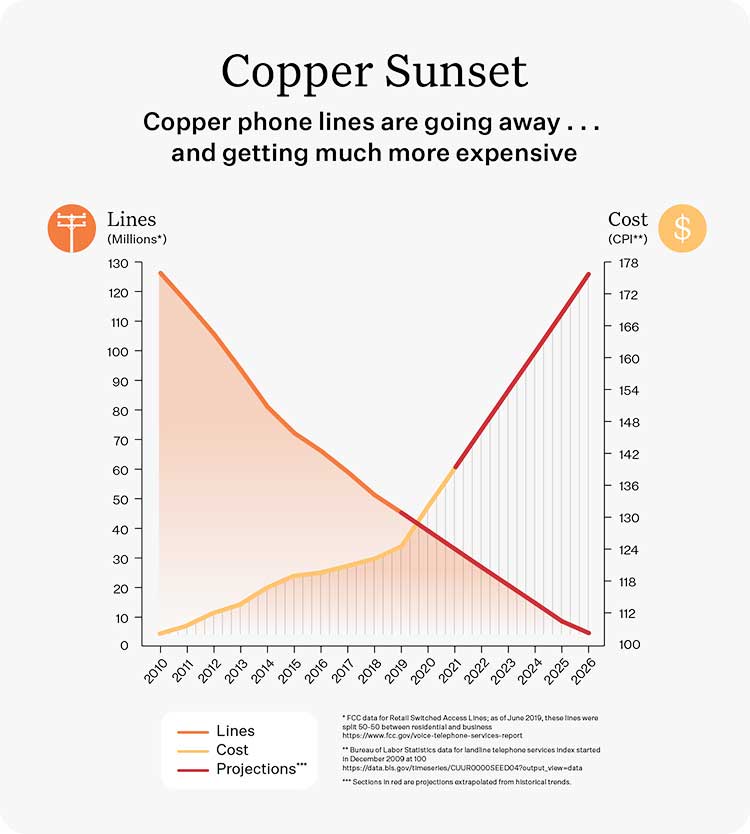

Bell and Telus, two major telecommunications providers in Canada, have been gradually transitioning from traditional copper-based infrastructure to more advanced fiber-optic networks and other digital communication technologies. This transition aims to provide faster, more reliable, and feature-rich communication services to their customers.
In urban areas and densely populated regions, both Bell and Telus have been investing heavily in deploying fiber-optic networks to deliver high-speed internet, television, and telephone services. As these fiber-optic networks expand, the reliance on copper infrastructure will decrease.
However, the retirement of copper infrastructure is not happening uniformly across the country. In some rural and remote areas, where the cost of deploying fiber-optic networks can be prohibitive, copper-based infrastructure may still be in use for the foreseeable future.